Worked example
A homeowner walks through Monte
One household, start to finish: their facts, their plan, a decision they kept, a question they priced, and a daydream with a date on it. · 6-minute read
The household
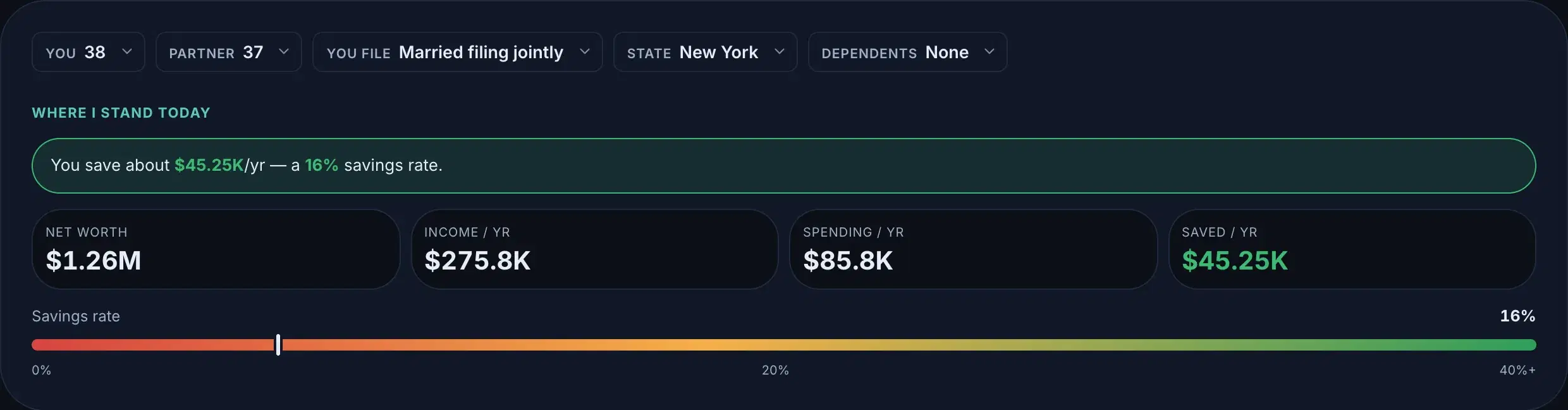
Meet a family you've already seen — theirs are the numbers in every screenshot across these guides. Two salaries and a side consulting practice, about $275K a year together. A home carrying a mortgage. Around a million invested across a 401(k), a Roth, an HSA and a brokerage account, saving roughly 18% of gross. Two kids' worth of plans and a lake-house daydream. Comfortable, busy, and (before Monte) planning by spreadsheet and gut.
Their facts, then their plan
Onboarding took them about fifteen minutes: paychecks with the 401(k) contributions attached, one living-costs line they refined later, the accounts, the house with its mortgage riding along. The Dashboard confirmed what they half-knew: where the paycheck goes, what the state takes, what's left. Then they opened their plan, and the rail beside the forecast became the interesting part.
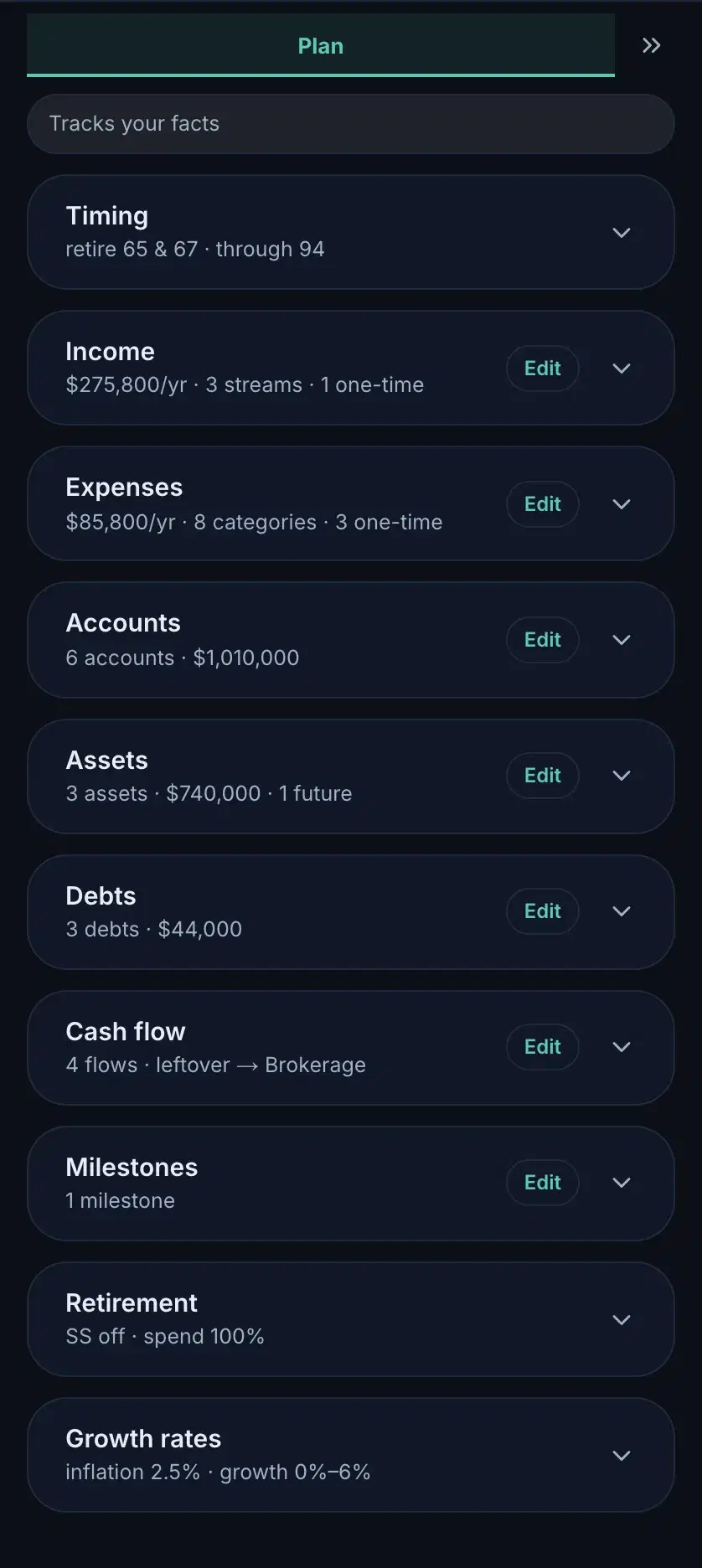
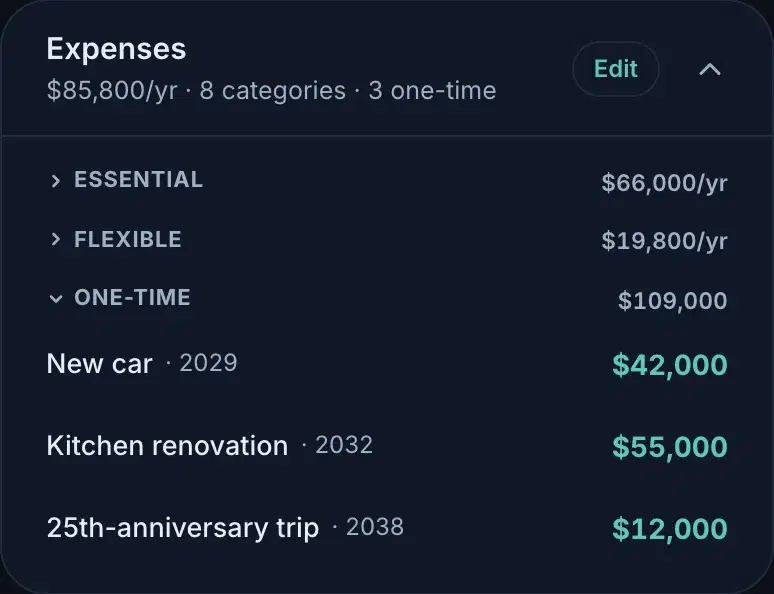
Two things they set early, both from this rail: the home's appreciation in Growth rates (the default was fine, but now it was theirs), and the life they already knew was coming as one-time costs under Expenses: the car in three years, the kitchen at 44, the anniversary trip they refuse to skip.
First question: when can we stop?
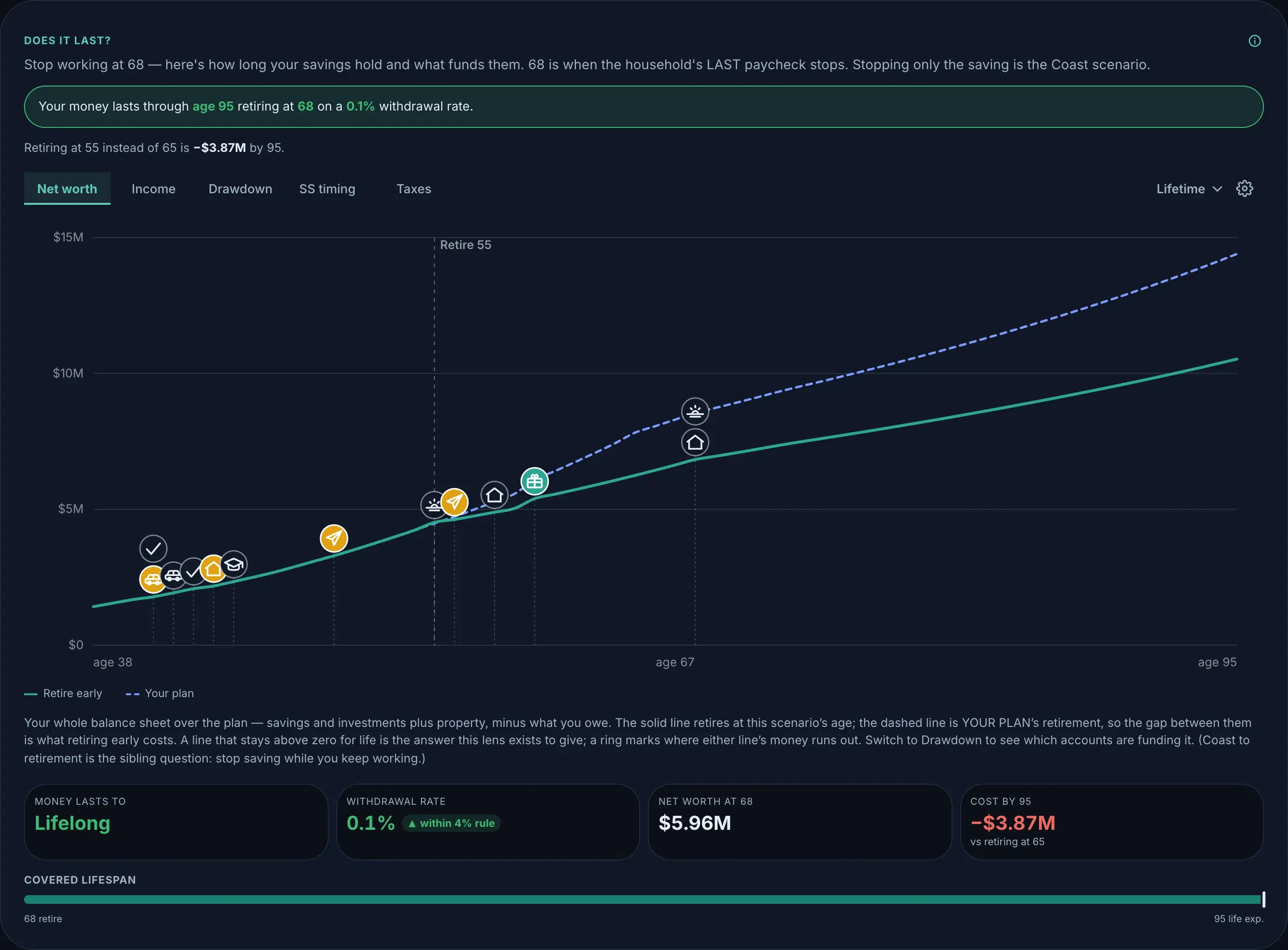
Their first scenario was the obvious one: + New → Retire early. They dragged the age down from 65 and watched the fork: 60 held easily, 55 still ended with money to spare. They sanity-checked the dials (Social Security claimed at 67, spending flat), then pressed Add to plan in the scenario's chip menu. Their plan's retirement age became 55, an ordinary fact in Timing now, theirs to edit like any other. If the answer moves, they'll drag the dial and Add again; the new age overwrites the old.
Second question: could one of us stop sooner?
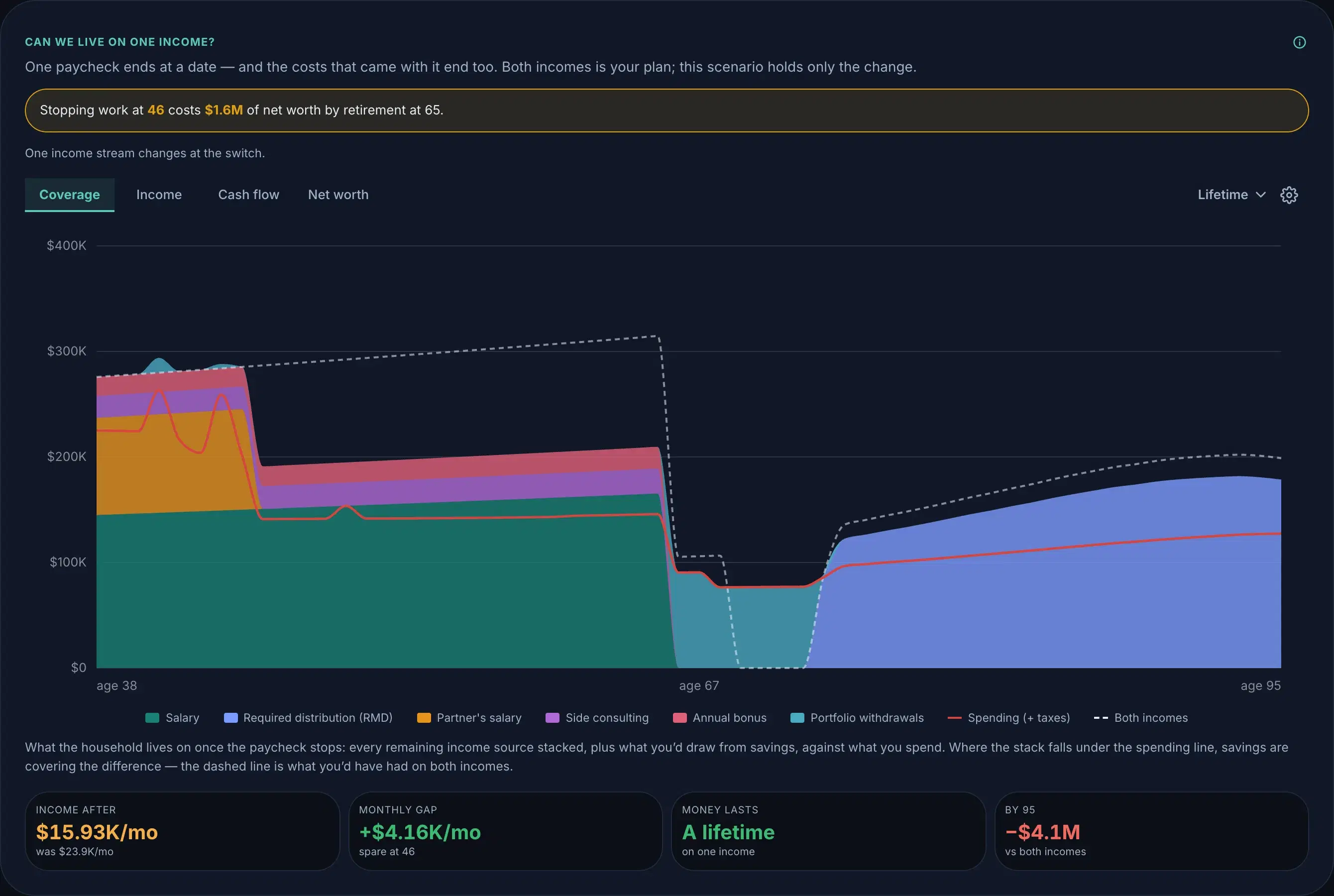
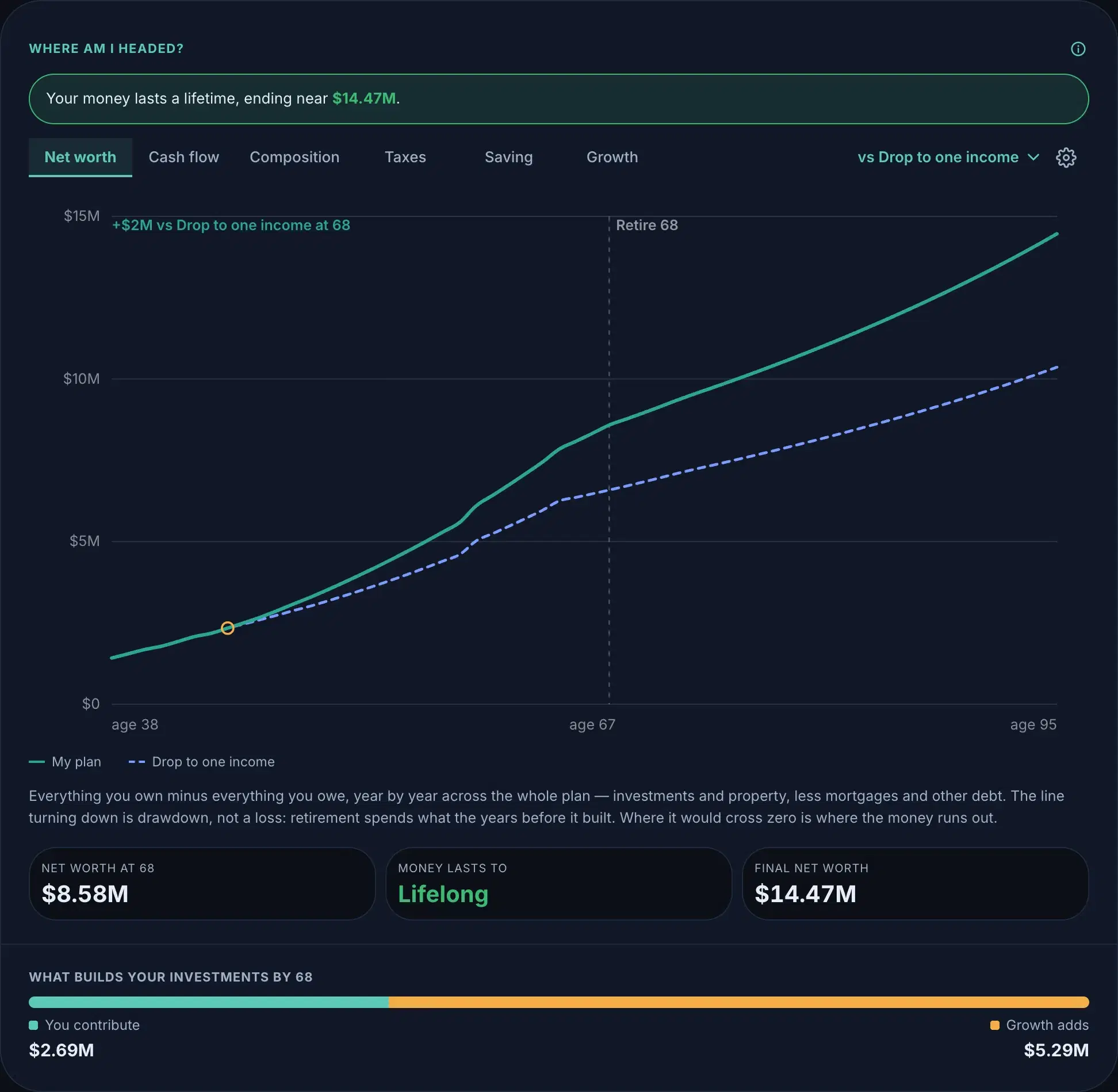
The consulting practice was becoming a grind. So: Drop to one income, ending that stream in two years. Rather than adding it to the plan, they put it on the chart (Compare, pick the scenario) and looked at the honest answer: about $2M less by retirement, and the money still lasting for life. That's not a yes or a no; it's a price tag, which is what they wanted. The scenario stays parked on the rail for the day the grind wins.
Third question: the lake house
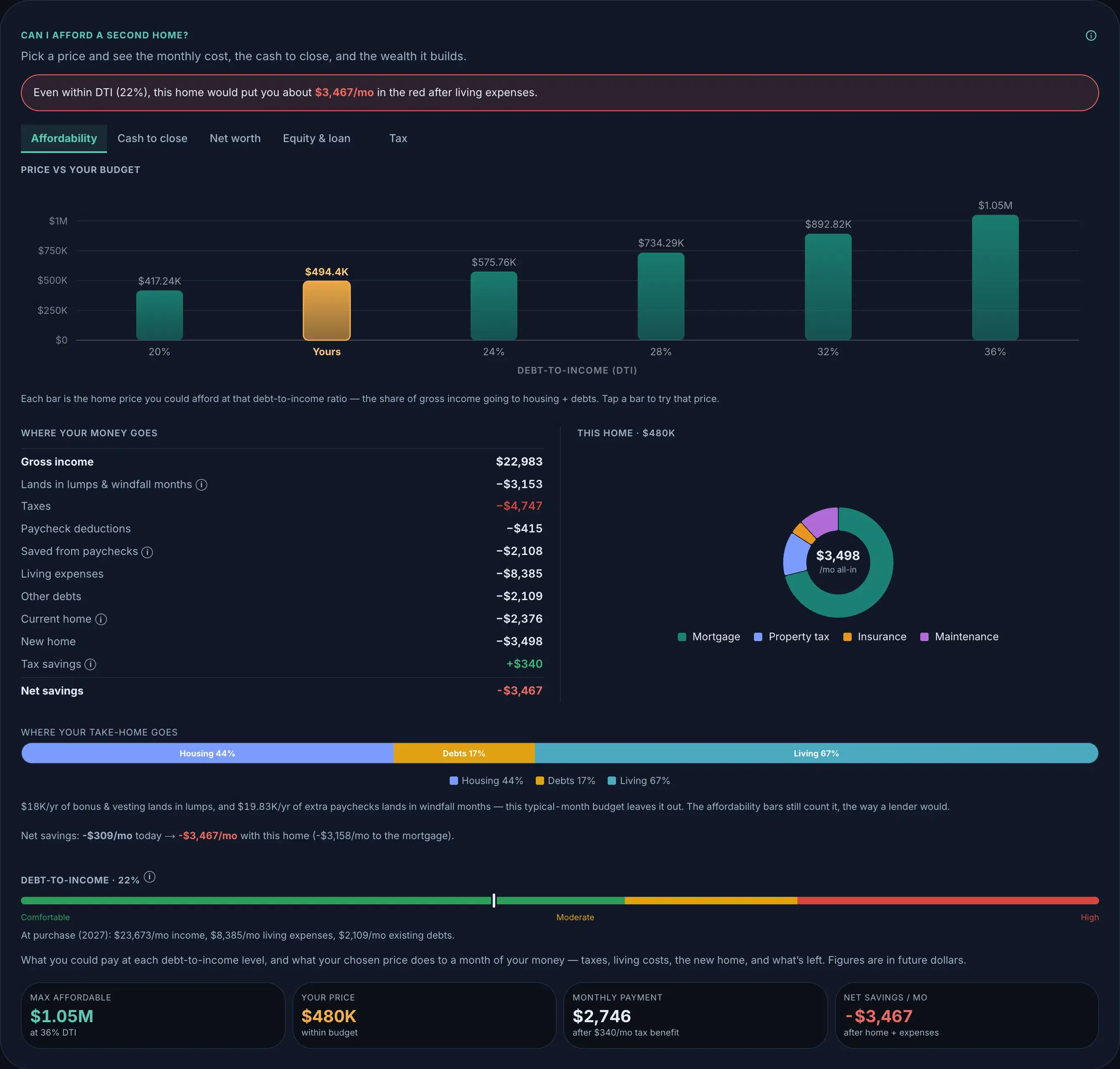
The daydream got its own scenario too. Buy a home works for a second place just as well as a first: price, down payment from the brokerage, what it does to everything else. The first attempt at 50 bent the retirement line badly; at 58, with the mortgage nearly done, it barely moved. They kept the marker in their life events and the scenario on the rail: a decision with a date it works, waiting for them to mean it.
Where they ended up
One plan. One decision inside it (retire at 55, now just a fact in Timing). Two scenarios parked on the rail with real answers attached, costing nothing to keep. That's the shape most households land on: not eight plans, not a spreadsheet of tabs, just a plan they trust and questions they can re-ask any time the answer might have changed.
Every screenshot in this story comes from the reference guides, where each surface gets its full manual: the rail and the life events from Down the plan rail, the chart comparison from Saving & comparing, and the lenses themselves from the lens catalog.